

"Cortisol" is having a moment. Cortisol mocktails, cortisol face, morning routines built around "lowering your cortisol" — the word is everywhere on social feeds. Some of it is real physiology. A lot of it is wishful thinking dressed up as science. So let's separate the two, and see where an adaptogen like Korean red ginseng actually fits.
What cortisol actually is
Cortisol isn't a villain. It's a hormone your body releases on a daily rhythm — higher in the morning to get you going, lower at night so you can wind down — and in bursts when you're under stress. You need it. The issue people are reaching for language about isn't "cortisol exists," it's the feeling of being stuck on: wired-but-tired, poor sleep, the sense that the body's stress response never fully switches off.
Modern life makes that easy. Chronic work pressure, ultra-processed food, sleep debt, too much caffeine, constant input — it all keeps the system running hot, and the body loses some of its natural ability to self-regulate and return to balance.
Where the trend goes wrong
Here's the honest part. No tea, powder, or stick "detoxes cortisol" or melts stress away on contact. If a product promises to crash your cortisol, be skeptical — that's not how the body works, and it's not a claim worth trusting. The useful question isn't "what lowers cortisol fastest." It's "what helps my body adapt and find its own balance again."
That reframing is exactly where a real category of plants comes in — and it's a category with a precise definition, not a hashtag.
The actual science of adaptogens
The term "adaptogen" was coined in 1947 by the Soviet scientist Lazarev, describing substances that raise the body's non-specific resistance to stress. European medicines regulators later described adaptogens as substances able to normalize bodily function and strengthen systems compromised by stress. The key word is non-specific: an adaptogen isn't aimed at one organ like a drug — it's associated with helping the body's overall balance, its homeostasis.
A simple way to picture it: think of a scale tipped to one side when you're run down. An adaptogen is traditionally associated not with shoving the scale, but with helping it find level again. That's a fundamentally different idea than a stimulant that pushes, or a sedative that pulls.
And of all the plants studied since the 1950s, one is most often described as the original, defining adaptogen: Korean ginseng. Early researchers — Brekhman, who studied physical endurance, and Petkov, who documented anti-stress effects — built the field largely around it.
Source: Korean Society of Ginseng educational materials; historical adaptogen research (Lazarev, 1947; Brekhman; Petkov).
Trend vs. reality, side by side
So how does ginseng fit a stressed modern life?
Not as a sedative, and not as a caffeine-style jolt. Korean red ginseng is studied and traditionally used in relation to helping the body adapt to physical and mental load and supporting healthy energy and resilience — the steady, balancing end of the spectrum rather than the spike-and-crash end. (If you want the deeper background on the word itself, we wrote about what an adaptogen is here.)
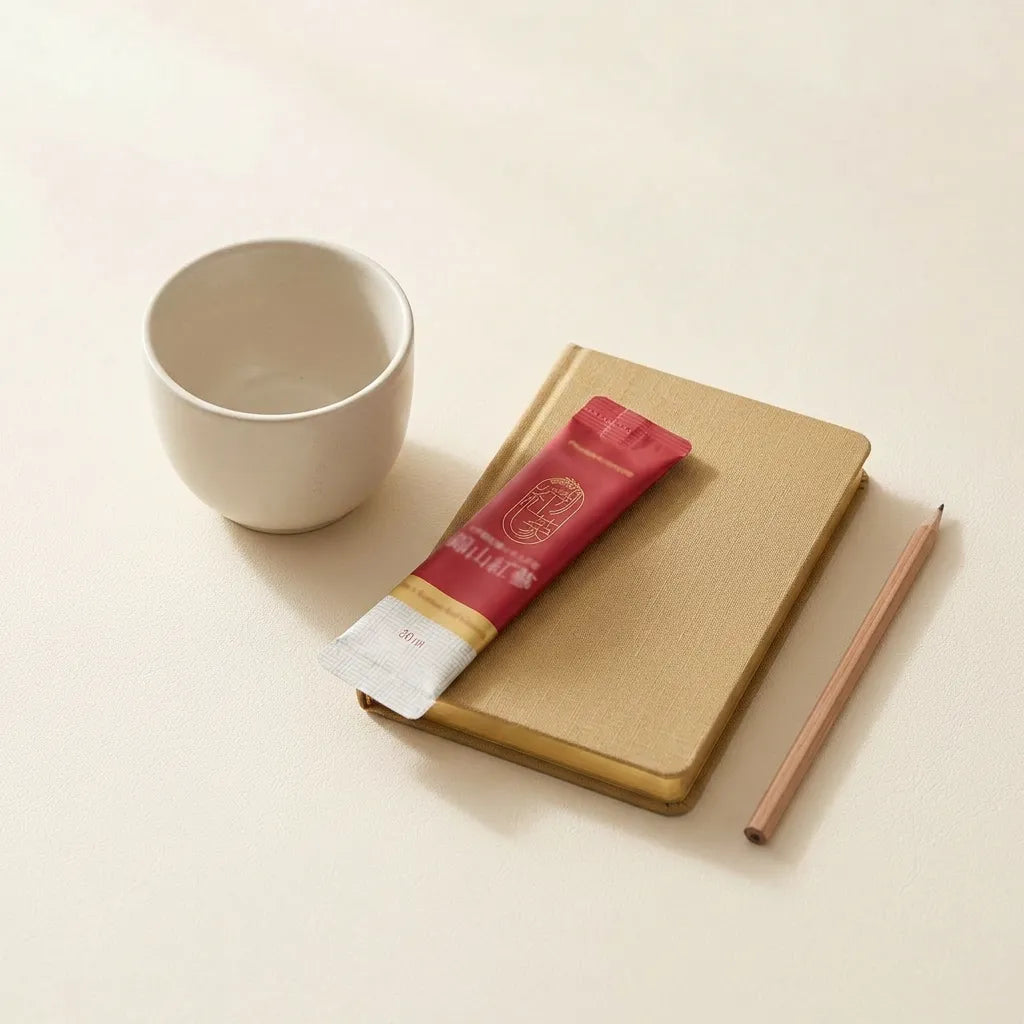
Taken as a small daily ritual — caffeine-free, a 30 ml stick in the morning or mid- afternoon — it fits the actual goal behind all the cortisol talk: not chasing a number, but giving an overloaded system a little more support to find its own balance.
Less hype, more balance Dr. Choi's Korean Red Ginseng is the original adaptogen, done properly — caffeine-free, 6-year Geumsan roots, full spectrum, lab-tested every batch. A daily ritual, not a quick fix.
Explore the ginseng →* These statements have not been evaluated by the Food and Drug Administration. This product is not intended to diagnose, treat, cure, or prevent any disease. Adaptogen research is ongoing and individual responses vary. This article is educational and is not medical advice; if you are experiencing ongoing stress, sleep problems, or any health concern, please consult a qualified healthcare professional.