
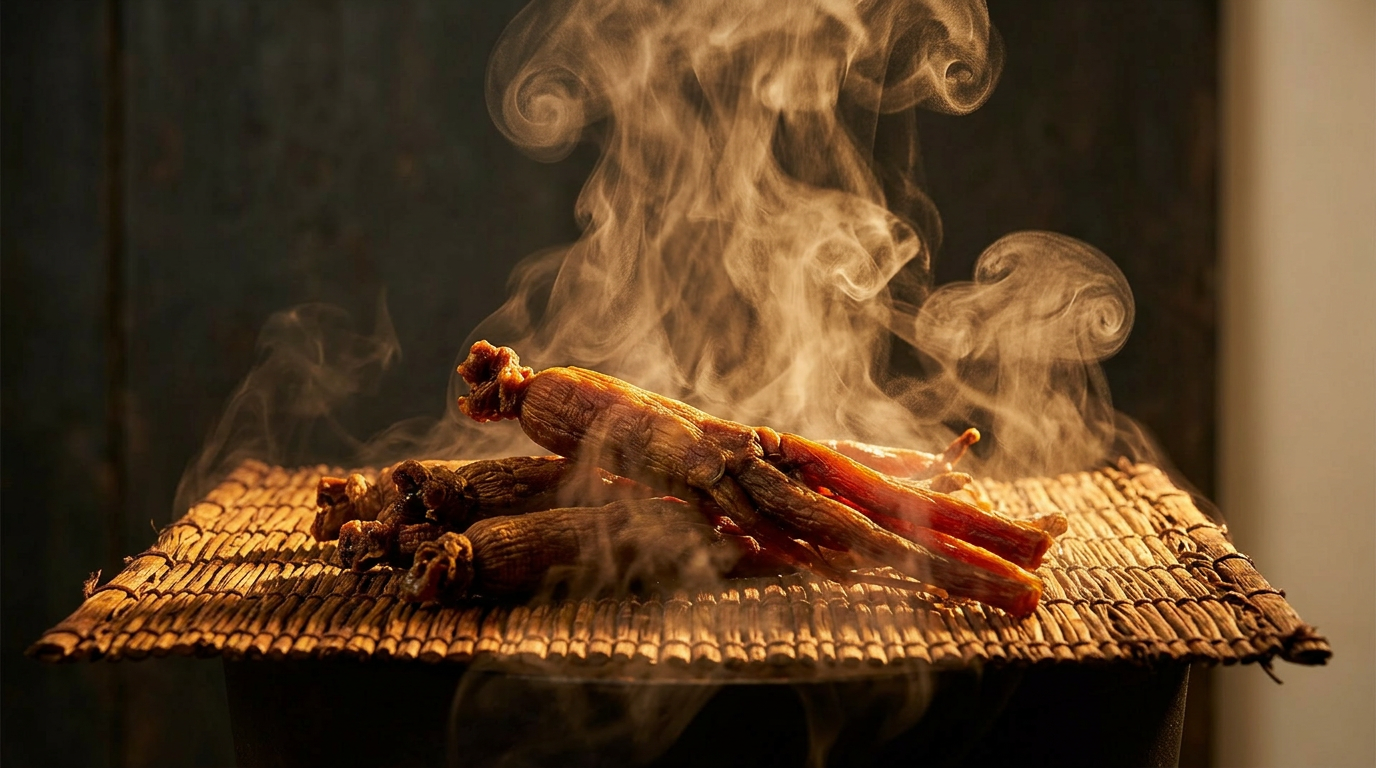

White ginseng and red ginseng start as the exact same plant. What separates them is one step: steaming. It sounds almost too simple to matter — but that single process is the reason red ginseng exists as its own category, with compounds the fresh root never had. Here's what actually happens inside the root.
Same root, two destinies
Pull a ginseng root from the ground and you have fresh (or, once simply dried, "white") ginseng. To make red ginseng, that same root is steamed and dried — and the transformation gives it both its reddish color and its name. The traditional process looks like this:
In East Asian medicine, processing a raw botanical like this — by steaming, drying, or fermenting — has a long tradition, done to extend shelf life and to deepen the material's properties. With ginseng, the steaming does something remarkable to the chemistry.
What the heat actually creates
Steaming isn't just preservation. The heat transforms the root's compounds and even generates new ones that weren't meaningfully present before. Three things happen that matter:
| During steaming… | What changes |
|---|---|
| New ginsenosides appear | Compounds like Rh1, Rg2, and Rg3 — characteristic of red ginseng — are formed. The total count of ginsenoside types rises substantially. |
| Saponins become more absorbable | Some ginsenosides convert into forms the body tends to take up more readily. |
| Non-saponins rise | Polysaccharides — including the acidic polysaccharides discussed in immune-related research — are reported to increase by over 60%. |
Source: Korean Society of Ginseng educational materials on red-ginseng processing.
That last point is easy to overlook. The steaming step doesn't only multiply the ginsenosides everyone talks about — it raises the "hidden half" of red ginseng, the non-saponin compounds we covered in a separate piece. Fresh ginseng simply doesn't have this fuller profile.
The Rg3 question
Among the compounds steaming creates, Rg3 gets special attention. It's a rare ginsenoside that's largely formed during processing rather than sitting in the fresh root, and it's studied in relation to circulation and antioxidant balance. The catch: getting a high concentration of Rg3 through ordinary processing is genuinely difficult. That difficulty is exactly why Rg3 content has become a marker of premium, well-controlled red ginseng.
Where Dr. Choi's goes further: our red ginseng is made by a patented process (KIPO Patent No. 10-1434444, "method for preparing red ginseng extract with enhanced Rg3") that concentrates this rare ginsenoside without artificial chemical additives — using the manufacturing process itself rather than shortcuts.
So why does "red" matter when you're buying?
Because two sticks can both say "ginseng" and contain very different things. Fresh or minimally processed ginseng is a different material than properly steamed red ginseng — which carries a wider ginsenoside range, more absorbable forms, and a higher non-saponin profile. When the label says red ginseng, and the maker can show how it was processed, that word is doing real work.
It's also why the source and the process belong on the label next to the milligrams. The number tells you how much; the process tells you what kind.
Steamed the traditional way Dr. Choi's is 6-year Geumsan Korean red ginseng — traditionally steamed, Rg3-enhanced by patented process, full spectrum kept intact, and lab-tested every batch.
Explore the ginseng →* These statements have not been evaluated by the Food and Drug Administration. This product is not intended to diagnose, treat, cure, or prevent any disease. The compound changes described reflect published analyses of red-ginseng processing and areas of ongoing research, not guaranteed effects, and individual responses vary. This article is for educational purposes and is not medical advice; if you are pregnant, nursing, taking medication, or managing a health condition, consult a qualified healthcare professional before starting any supplement.